
Introduction: Longevity Is the Missing Metric
Modern business culture is obsessed with growth, valuation, and scale. Revenue curves are celebrated; headcount expansion is praised; market capitalization is treated as proof of success.
But there is one metric almost never discussed — institutional lifespan.
How long do institutions actually last?
Not how fast they grow.
Not how efficiently they extract value.
But whether they are structurally capable of surviving across generations.
When we examine the data honestly, a disturbing pattern emerges:
modern institutions are dying younger — much younger — than their predecessors.
This is not a coincidence. It is a structural failure.
The Collapse of Institutional Longevity
In the mid-20th century, corporations that entered the S&P 500 could reasonably expect to remain there for decades. These firms were not optimized for quarterly performance; they were designed for endurance.
That world no longer exists.
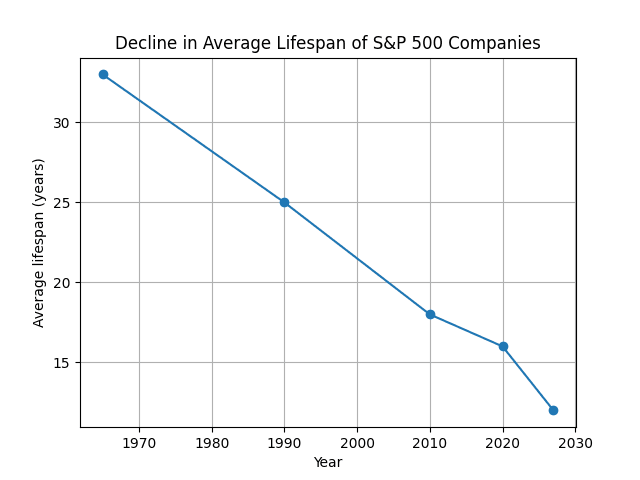
Figure 1. Decline in Average Lifespan of S&P 500 Companies
This chart shows the steady collapse of institutional lifespan:
- ~33 years in the 1960s
- ~25 years by 1990
- ~18 years by 2010
- ~16 years today
- Projected ~12 years by 2027
This data is widely cited in long-term studies by Innosight and academic research on corporate churn.
What matters is not the exact number — it is the direction.
Modern institutions are not built to last. They are built to extract, optimize, and exit.
Turnover Is Not Innovation — It Is Fragility
Advocates of “creative destruction” often argue that rising turnover is a sign of healthy innovation. But turnover alone tells us nothing about quality.
When replacement accelerates without corresponding gains in resilience, it signals fragility — not progress.
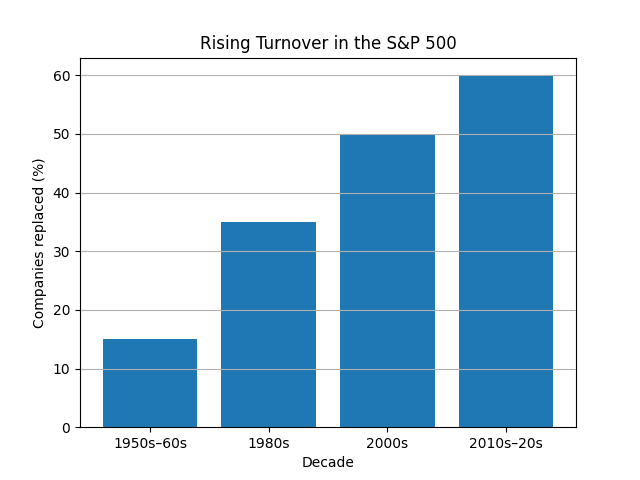
Figure 2. Rising Turnover in the S&P 500
This chart shows the percentage of companies replaced in the index over time:
- ~15% per decade (1950s–60s)
- ~35% by the 1980s
- ~50% by the 2000s
- ~60% in the 2010s–2020s
This is not renewal.
It is institutional erosion.
Systems optimized for short-term efficiency burn through organizations the way high-frequency trading burns through capital — rapidly, impersonally, and without memory.
What Durable Institutions Used to Understand
Historically durable institutions — monasteries, guilds, family banks, universities, sovereign treasuries — shared common traits:
- Clear moral boundaries
- Intergenerational accountability
- Cultural continuity
- Resistance to pure optimization
They were not maximally efficient.
They were structurally coherent.
Modern institutions invert this logic:
- Governance without moral cost
- Profit without custodianship
- Growth without obligation
The result is speed — and collapse.
Why This Matters for Capital, Domains, and Digital Assets
This erosion is not confined to corporations. It affects digital property, brands, and even domains.
Domains that endure are not the ones tied to trends.
They are the ones aligned with:
- Meaning
- Linguistic permanence
- Cultural memory
- Institutional continuity
This is why short, semantically grounded .com domains persist while trend-driven names decay.
Longevity is not accidental.
It is designed — or it is ignored.
The Valora Maxima View
At Valora Maxima, we do not measure assets by hype cycles.
We evaluate them by structural survivability.
The question is not:
“How fast can this grow?”
The real question is:
“Will this still matter when the system that birthed it no longer exists?”
Institutions, like assets, either carry memory forward — or vanish without trace.
Conclusion: Growth Is Loud. Endurance Is Rare.
The data is unambiguous.
Modern systems reward velocity and punish durability.
They mistake churn for vitality and fragility for innovation.
But capital that survives — real capital — flows toward what endures.
Longevity is the last honest signal left.